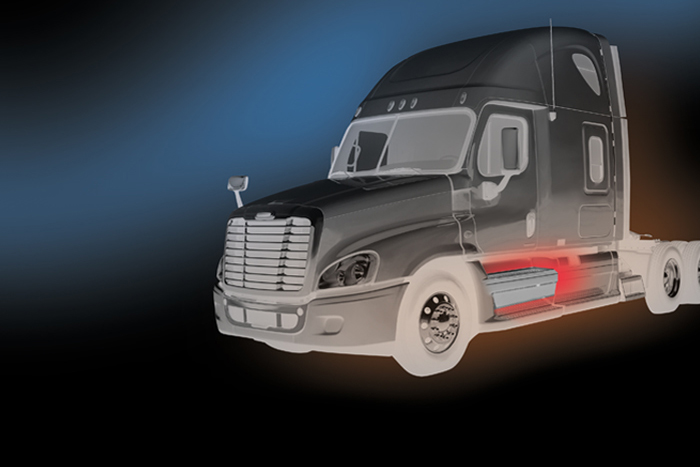
Trucks don’t look the way they did a decade ago. Today’s trucks are designed for efficiency, with aerodynamic profiles and sleek cab structures replacing the boxy designs of the past. Every curve and panel is engineered to reduce drag and improve fuel economy, helping fleets operate more efficiently with every mile traveled.
These external improvements, however, have changed what happens under the hood. Exhaust systems are no longer mounted prominently above the cab and added skirting redirects airflow along the body of the truck. While these adjustments enhance aerodynamics, they also limit the natural cooling airflow that once reached under cab components, including the battery. As a result, battery boxes can experience higher sustained temperatures than in previous truck designs.
Heat is one of the most damaging forces affecting battery performance. Elevated temperatures accelerate internal chemical reactions, increasing the risk of thermal runaway and significantly shortening service life. In severe cases, excessive heat can lead to premature failure and unexpected downtime, putting added pressure on drivers and maintenance teams alike.
As truck design continues to evolve, fleets must account for the changing demands placed on critical components. Batteries built with Fahrenheit Technology are built to deliver reliable power and longer service life, even in extreme environments, like high heat created by modern truck designs. By addressing the challenges of today’s trucks, Fahrenheit batteries help fleets maintain performance, reduce unplanned downtime, and keep operations moving forward with confidence.